
Safety
This page summarizes safety information for aspirin, drawing from FDA-required labeling and findings reported in randomized controlled trials evaluating aspirin in colorectal cancer.* The goal is to provide clinicians with a consolidated, factual overview of known safety considerations related to aspirin use.
Aspirin has been used in the U.S. since 1915 in over-the-counter (OTC) formulations.1,2 Its uses include temporary pain relief, fever reduction, and risk reduction for heart attacks and strokes.2-4 The safety information below is derived from OTC Drug Facts labeling for low-dose aspirin (81 mg) and is provided for general reference. The ALASCCA study evaluated a higher daily dose (160 mg), and safety findings from that study are summarized below and on the Evidence page.
Aspirin is not FDA-approved for the treatment of colorectal cancer. This page is intended for informational purposes only and is not intended to provide medical advice and should not be relied upon in that regard. Clinicians should make individual prescribing decisions for their patients based on the patient’s clinical presentation and the clinician’s own medical decision-making.
Clinical considerations for low-dose aspirin (81 mg)2:
Stomach bleeding warning
Nonsteroidal anti-inflammatory drugs (NSAIDs) such as aspirin may cause severe stomach bleeding. The risk is higher in individuals who:
Are ≥60 years old
Have had stomach ulcers or bleeding problems
Take a blood thinning (anticoagulant) or steroid drug
Take other drugs containing prescription or nonprescription NSAIDs (ibuprofen, naproxen, or others)
Have ≥3 alcoholic drinks every day while using aspirin
Exceed the recommended dose or duration of aspirin use
Allergy alert
Aspirin may cause a severe allergic reaction, which may include: hives, facial swelling, asthma (wheezing), and shock.
Reye’s syndrome
Children and teenagers who have or are recovering from chicken pox or flu-like symptoms should not use aspirin. Changes in behavior with nausea and vomiting while on aspirin could be an early sign of Reye’s syndrome.
Stomach ulcers
Aspirin may increase the risk of developing stomach ulcers, particularly with higher doses and long-term use.5,6
Additional precautions should be taken in individuals who2:
Are taking a prescription drug for diabetes, gout, or arthritis
Have a history of stomach problems, such as heartburn
Have asthma, high blood pressure, heart disease, liver cirrhosis, or kidney disease
Are taking a diuretic
Have ever had an allergic reaction to any other pain reliever/fever reducer
Are pregnant or breastfeeding
Aspirin should not be used during the last 3 months of pregnancy unless directed to do so by a clinician because it may cause problems in the unborn child or complications during delivery.
Adverse events associated with aspirin use in patients with stage II–III PI3K-altered colorectal cancer after definitive treatment:
In the ALASCCA trial, severe adverse events were reported in 16.8% of patients receiving aspirin and 11.6% of patients receiving placebo.7 Nonsevere adverse events of any cause were reported in 43.4% of patients receiving aspirin versus 35.4% of patients receiving placebo.7
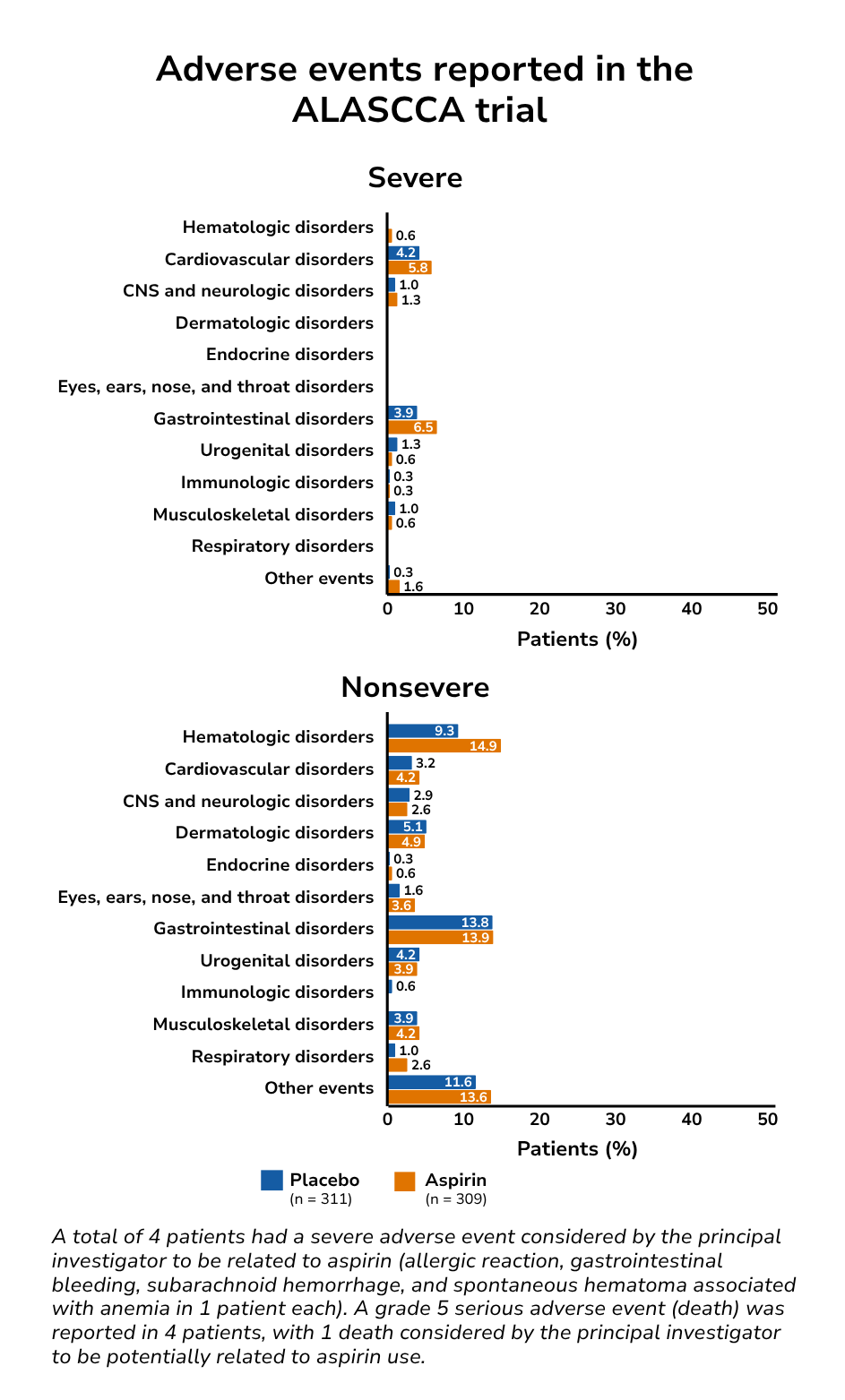
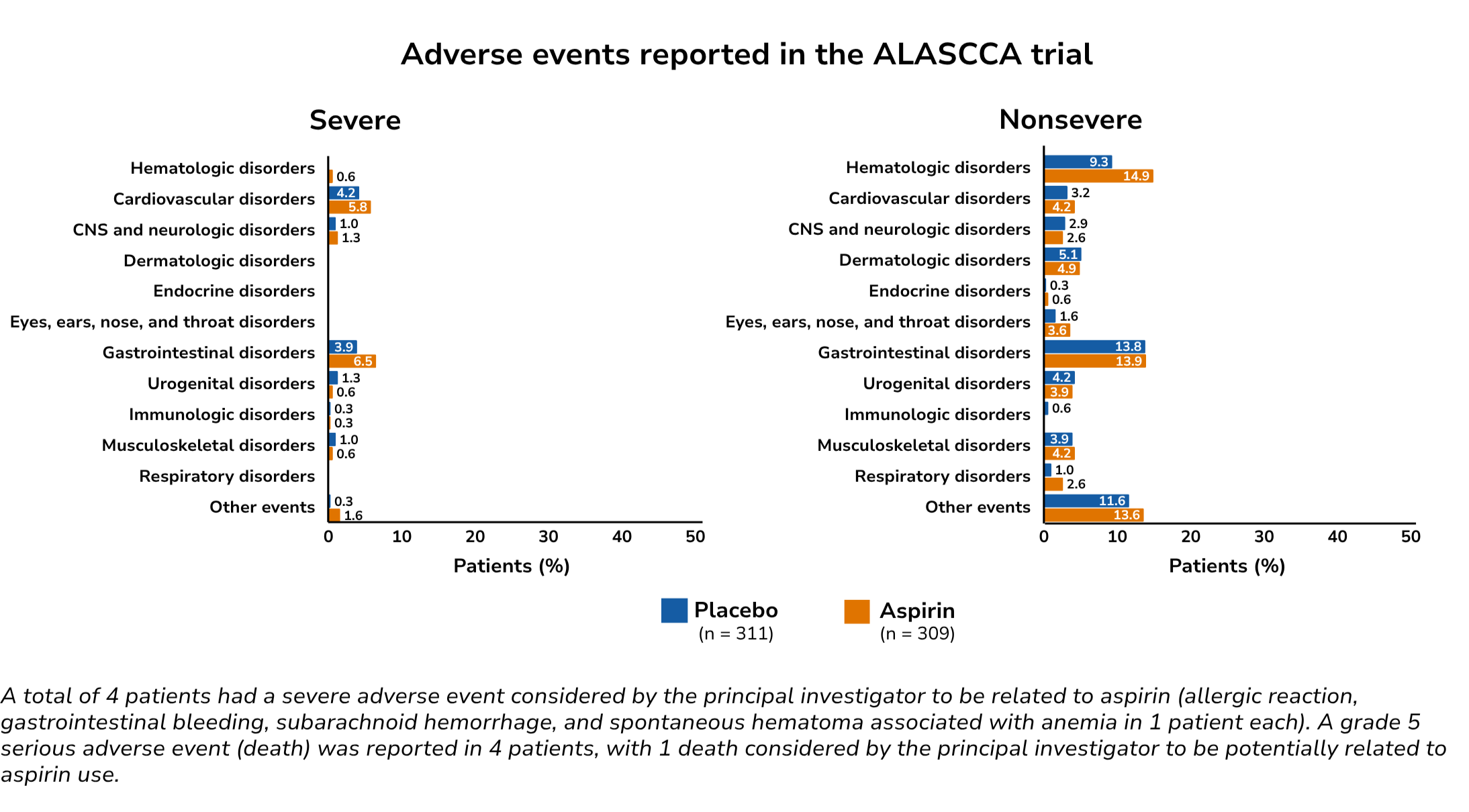
In the SAKK 41/13 trial, grade 3 treatment-emergent adverse events were recorded in 1 patient receiving aspirin (dizziness) and 3 patients receiving placebo (anemia, colonic hemorrhage, and cranial fracture with intracranial hemorrhage).8,9 No treatment-related serious adverse events were recorded.8
See the Evidence page for more information on these studies and the safety outcomes. While the studies reported safety outcomes, no statistical analyses were conducted on the safety data. The ability to detect uncommon, delayed, or long-term adverse events was limited by sample size, event rates, and duration of follow-up.
*Safety information for aspirin may vary by dose and formulation. For complete safety information, please refer to an aspirin product label.
References:
1. Science History Institute. Aspirin: Turn-of-the-century miracle drug. Published June 3, 2009. Accessed March 17, 2026. https://www.sciencehistory.org/stories/magazine/aspirin-turn-of-the-century-miracle-drug/ 2. DailyMed. Aspirin tablet, delayed release (81 mg). Updated December 12, 2025. Accessed March 16, 2026. https://dailymed.nlm.nih.gov/dailymed/drugInfo.cfm?setid=c0fb38f5-79bb-7460-e053-2995a90a1667 3. DailyMed. Aspirin tablet, delayed release (325 mg). Updated December 12, 2025. Accessed March 16, 2026. https://dailymed.nlm.nih.gov/dailymed/lookup.cfm?setid=d8b5d5b4-44d2-4f8f-8c11-e4fc96504f59 4. U.S. Food and Drug Administration. Aspirin for Reducing Your Risk of Heart Attack and Stroke: Know the Facts. Updated December 16, 2019. Accessed March 17, 2026. https://www.fda.gov/drugs/safe-use-aspirin/aspirin-reducing-your-risk-heart-attack-and-stroke-know-facts 5. Nguyen TNM, et al. Aliment Pharmacol Ther. 2022;56(2):251–262. 6. American College of Gastroenterology. Peptic ulcer disease. Published November 2007. Updated June 2024. Accessed July 7, 2026. https://gi.org/topics/peptic-ulcer-disease/ 7. Martling A, et al. N Engl J Med. 2025;393(11):1051–64. 8. Güller U, et al. Clin Cancer Res. 2025; 31(15):3142–49. 9. Blanchard-Cavagis ER, et al. Crit Rev Oncol Hematol. 2026;220:105167.
Subscribe to receive updates on Reboot Rx and our work on aspirin.
Reboot Rx is a registered 501(c)(3) nonprofit organization. Reboot Rx does not manufacture or sell drugs, and does not profit from the sale of drugs. Information provided on the Reboot Rx website (the “Information”), available at http://rebootrx.org (the “Site”), is intended for U.S. healthcare professionals only and not intended for patients. Information available on this Site is intended for informational purposes only and is not intended to provide medical advice and should not be relied upon in that regard. Reboot Rx provides this Information as an educational resource for the benefit of the medical community. The Information on this website has not been evaluated by the Food and Drug Administration. Reboot Rx is not a medical provider or health care facility and does not practice medicine. It thus can neither diagnose any disease or disorder, nor endorse or recommend any specific medical treatments. Nothing on this Site constitutes medical advice, recommendations as to the suitability of any specific product, service or information, or diagnoses for any medical condition. Any materials made available via the Site are provided for convenience and informational purposes only. Any clinician seeking to apply or consult the content and/or derivative sources on this website must use their independent medical judgment in the context of the individual clinical circumstances to determine any patient’s care or treatment.